13th-14th of January 2024
There is a funicular in Santiago that takes you up a centrally located rump of a mountain, upon which I am told there is a storied view of the Chilean capital. It’s one of those ‘do once and never again’ things, like climbing the Eiffel Tower, or going to Birmingham.
My hotel concierge assured me it was worth the trip if nothing more than “to make a beautiful picture”. It’s 4 pm on a Saturday; 33 degrees, but a dry heat with a pleasant breeze. I take his word for it and set off through a long narrow park, at a languid pace. The park hugs the city’s river – the channelled, Mapocho – which runs hastily toward the Pacific, driven by summer Andean melt-water. There’s a slight haze in the sky from a far-off fire, but otherwise, it’s a deep mid-summer blue.
Crossing the river, after a couple of miles, the route becomes swiftly flanked by the kind of bars and restaurants you’d expect to find on the main strip in Kavos. The energy intensifies, and by the time I reach the considerable looking queue – lined with empanadas and churros vans – I’ve already made my mind up to swerve to the West. This is not my tempo.
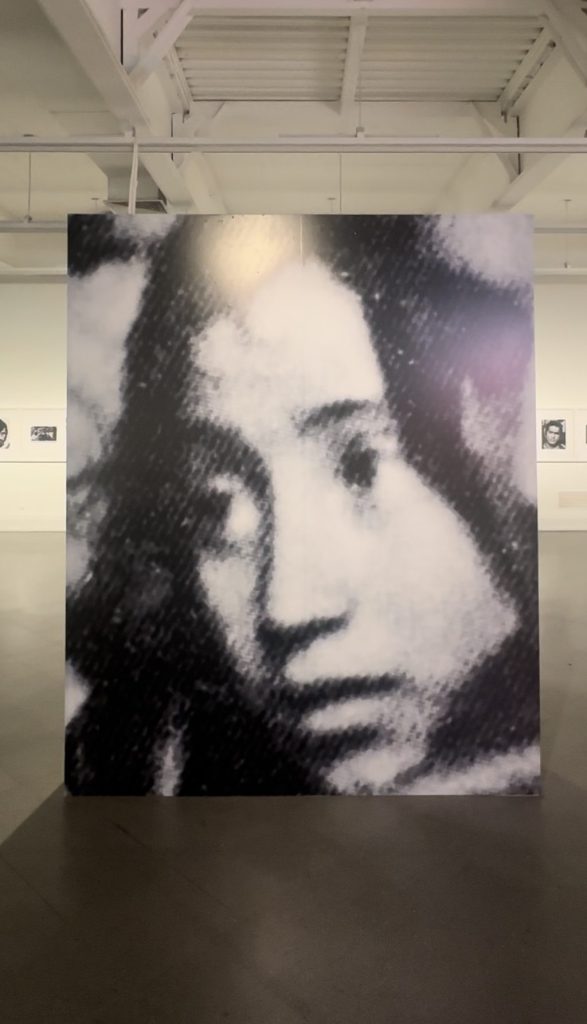
Devoid of the opportunity to make a literal picture of Santiago, I settle for a temperature check in the national museums. I’ve been to a few Latin American capitals now, and a pattern is emerging[1]: anthropological background; native peoples; colonial struggles; military coup; democratic rebirth; colonial apology; emerging modern nation. The art mostly reflecting the collective trauma of these major upheavals.
Despite it being Saturday night, I am in no mood to pursue an evening, so settle for some sushi[2] and an early night.
I have developed quite a committed coffee habit over the years, and part of my excitement for this trip is to get closer to the source of some of this wondrous fruit. Like the modern trend for local craft breweries, most cities these days will have several coffee roasteries, roasting a wide variety of speciality beans, sourced directly from farmers across coffee-producing nations. Seek them out and you’ve found your single-origin, inverted Aeropress crowd. In an attempt at a degree of self-awareness (but probably more of a feather in the cap for the nominative determinists), I share one of these passions with a small selection of friends on a WhatsApp group called ‘Beer Bell-Ends[3]’. Sadly for me, I do not yet have a coffee-based equivalent. Let me know if you’re interested, I think you know what it’s going to be called.
Matias, who runs 3841 Coffee Roasters, does not speak much English, but he had me at anaerobic, so we sit nodding and chatting literal nonsense to one another whilst he makes me two of the best V60s I’ve ever had. He’s also banging out Bill Withers, Aretha Franklin and Nina Simone, so I settle in to watch the world drift by, sinking into place – slowing down into the moment. He’s a surfer too, I can just about make out, so has plenty of local experience to impart, if only I could understand it.
For the rest of the day, I wander around without a great deal of purpose, but at the sort of pace and with the kind of mindset I so look forward to when there is nothing to do, and have accepted it.
In London, there was, for a long time, a huge disused red-brick building, powering most of the city for its useful life. It remained menacingly overlooking the Thames – a constant reminder of a grimier, harsher, industrial past. A Grade 1 listed building (for the Americans: you can’t knock these down). For decades, no one knew what to do with it – it featured on the cover of a Pink Floyd Album in the 70s, the Prodigy hosted a rave there in the 90s, and Chelsea tried to turn it into their new stadium. In the end, it was sold to developers for ‘mixed-use development’, which loosely translates as ‘the local council sold out’. It’s still called Battersea Power Station, but it should be known as Battersea Shopping Centre.
There is a space in Santiago, called Mercado Urbano Tobalaba (MUT). My first thought on walking around this brilliantly designed modern public space was – this is what Battersea Shopping Centre should be. Creative spaces, such as outdoor theatre, areas for buskers and bands to perform; regular, locally subsidised markets for small, out-of-the-city businesses and sole traders to show their wares; gardens with indigenous flora, water features, vegetables and herbs; seating to encourage meditation. All of this at the hub of the idea that the space encourages creativity, and is everyones to share and enjoy. There are shops, and brands (someone’s got to pay for this), but they are not the driving force.
Battersea Shopping Centre, however (whilst I’m up here on my horse), is a shining example of how these spaces are planned badly. A great shrine to the modern church of buying more shit you don’t need – of shopping as a leisure activity. In thousands of years, if our modern culture is retrospectively dissected in national museums and galleries, what will they make of our great architectural and cultural contributions? “This was the era of the shopping centre, kids. They went out to buy things, then went home and played with their phones.” I imagine exam questions such as ‘If they could buy everything they needed on their phones, why did humans of the 2020s keep building shopping centres?’
I hope it goes without saying (but I’ll say it anyway in case anyone who doesn’t know me ends up reading this thing), that I’m being deliberately obtuse. People need to get out to socialise, to eat and drink; and the economy only works if we spend our money. And converting 1920’s industrial land for commercial use is very expensive. But a space designed to primarily fulfil the purpose of shopping is unlikely to be an inspiring and enduring place, so what do we get from it? It’s myopic. It’s cart before horse.
Santiago’s urban planners deserve a resounding pat on the back for Mercado Urbano Tobalaba – I hope some of them make it into the GLC. I leave MUT feeling good, with a deeper sense of connection, not junked on dopamine searching for my next hit.
Perhaps it was because it was mostly a Sunday, but Santiago appears to be a city enjoying life at a thoughtful, relaxed pace. A cleaner and calmer metropolis than Buenos Aires, and with a smaller ego.
The bus (yes, I’m taking a bus) leaves for the surf town, Maitencillo at midday on Monday. According to Matias the barista: the water is cold and the swell is big. His maniacal laugh at the latter point has not filled me with confidence. I haven’t been on a board in the best part of a decade.
[1] Albeit through a reductive Western perspective.
[2] Sushi in Chile appears to be analogous to curry in the UK – an adopted and bastardised cuisine, but bloody good nonetheless.
[3] Interestingly, Americans don’t tend to know the word ‘bell-end’, and usually find it to be a hilarious dicovery. I was delighted to find out recently, that an equivalent colloquialism across the pond, is ‘penis-cap’, which might even be funnier.
 Another Door In the Wall